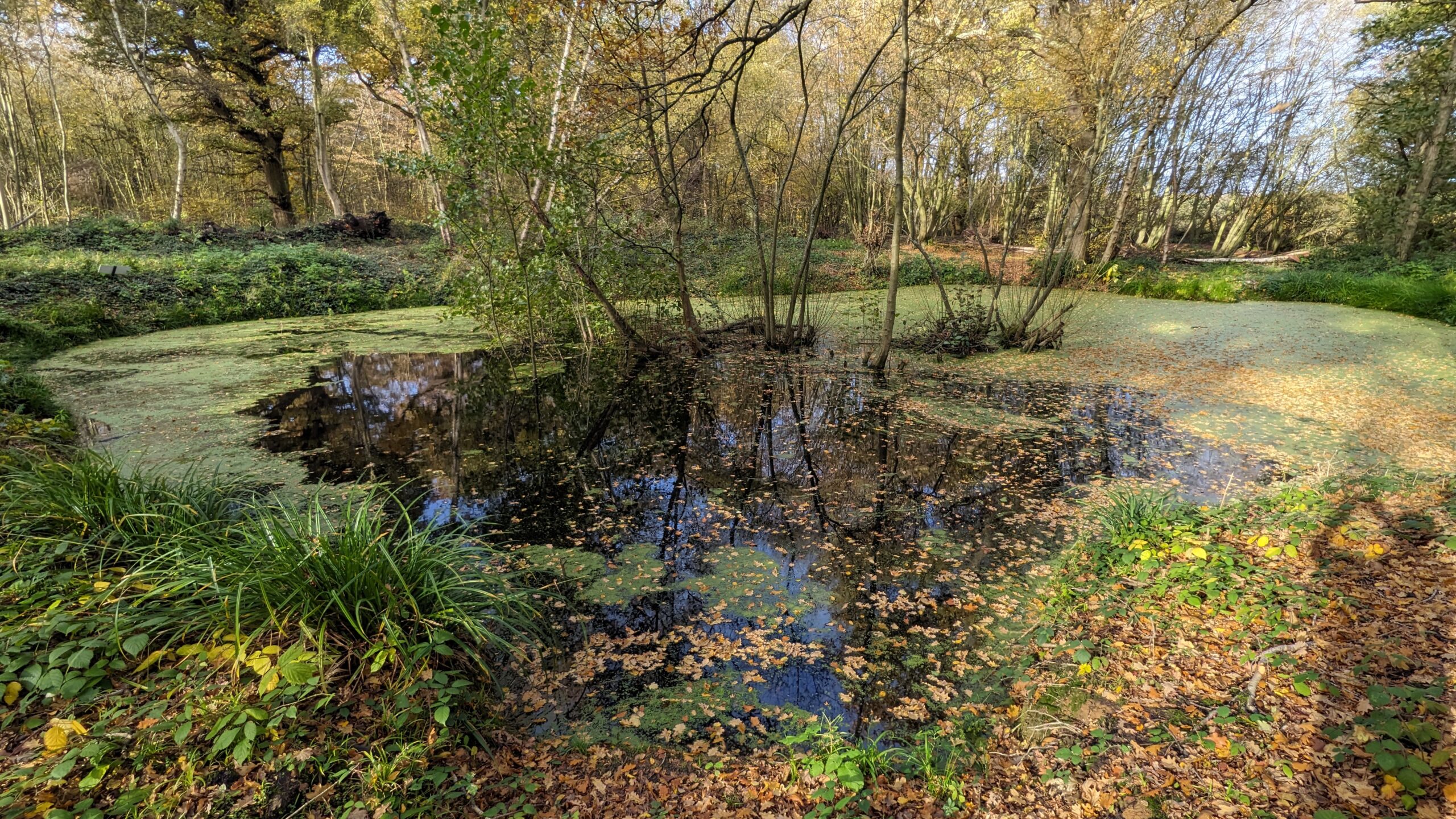
Wildlife Pond Design: Getting the Foundations Right
Creating a wildlife pond is often seen as one of the best things you can do for biodiversity in your garden — but good wildlife pond design is what makes it truly work.
And it is.
But like most things in ecology, how you do it matters.
Because a wildlife pond isn’t just a decorative feature.
It’s a functioning ecosystem.
And small design decisions determine whether it becomes a thriving habitat — or just another water feature.
If you’re thinking about how a pond fits into a wider wildlife-friendly garden, you can explore different wildlife garden habitats.
Why Wildlife Pond Design Matters More Than You Think
Across the UK, natural ponds have been disappearing for decades.
Pollution, drainage, development, and agricultural intensification have left many remaining ponds degraded or isolated.
Garden ponds are quietly filling that gap.
There are now millions of garden ponds across the UK, forming a network of small freshwater habitats that support:
Amphibians like frogs, toads, and newts
Aquatic invertebrates such as dragonflies and water beetles
Birds and mammals that rely on water
Individually, they’re small.
Collectively, they are significant.
In many landscapes, they are now essential.
A Wildlife Pond Is Not Just Water
It’s easy to think of a pond as a hole filled with water.
Ecologically, it’s much more than that.
A functioning wildlife pond includes:
Shallow margins
Submerged and emergent plants
Open water
Surrounding terrestrial habitat
These elements work together.
Remove one, and the system weakens.
Get them right, and wildlife responds quickly — often within weeks.
The Most Important Design Principle: Shallow Water
If there’s one thing that defines a successful wildlife pond, it’s this:
Shallow water matters more than depth.
The greatest diversity of life occurs at the edges of a pond — often in just a few centimetres of water.
This is where:
Amphibians lay spawn
Invertebrates develop
Plants establish
Deep, steep-sided ponds reduce this habitat.
Shallow, gently sloping ponds maximise it.
Water Quality: Start Clean, Stay Clean
Water quality underpins everything.
For wildlife ponds:
Rainwater is best
Tap water often contains nutrients that fuel algal growth
Runoff from lawns or fertilised areas should be avoided
A nutrient-rich pond quickly becomes dominated by algae.
A nutrient-poor pond supports plants — and plants support everything else.
Substrate, Structure, and Natural Colonisation
A good wildlife pond doesn’t need to be complicated.
Simple is usually better.
Use sand or washed gravel
Avoid adding soil or compost
Let wildlife colonise naturally
In spring:
Water beetles arrive within days
Dragonflies follow
Amphibians often appear within the first year
You don’t need to introduce wildlife.
You just need to create the right conditions.
Planting a Wildlife Pond Properly
Plants are the foundation of the system.
A well-functioning pond includes:
Submerged plants (oxygenators)
Floating-leaved plants
Marginal plants
These provide:
Shelter
Egg-laying sites
Food for invertebrates
Stability in water quality
Aim for a balance between vegetation and open water.
And avoid over-planting — ponds often develop naturally over time.
The Problem With Fish
This is one of the most common mistakes.
Fish and wildlife ponds rarely work well together.
In small ponds, fish will:
Eat amphibian spawn and tadpoles
Reduce invertebrate diversity
Increase nutrient levels
If your goal is wildlife:
Leave fish out.
The Habitat Around the Pond Matters Just As Much
A pond is only part of the system.
Amphibians spend much of their life on land.
They need:
Rough grassland
Log piles
Leaf litter
Dense vegetation
Adding features like log piles (see our guide to log piles) can dramatically increase the value of your pond by providing shelter and overwintering habitat.
Similarly, allowing areas of your garden to develop into a wildflower meadow (see our guide to creating a wildflower meadow) helps support the invertebrates that underpin the whole system.
A tidy garden edge might look good.
But a slightly messy one usually works better.
Common Mistakes to Avoid
Most wildlife pond problems come down to a few key issues:
Making ponds too deep
Steep-sided edges
Using tap water
Adding fish
Over-tidying
Introducing non-native or invasive plants
We’ll cover these in more detail in a separate post, but small decisions here can have a big impact on how well your pond functions.
(See: 3 Common Wildlife Gardening Mistakes – coming soon)
A Different Way to Think About Garden Pond Design
Wildlife gardening isn’t about adding features.
It’s about creating functioning systems.
A pond isn’t successful because it looks good.
It’s successful because it works.
And when it works, wildlife finds it.
Quickly.
Wildlife Garden Ponds: Small Feature, Big Impact
A single pond might feel like a small change.
But across millions of gardens, they form a network.
A network that supports:
Amphibians
Invertebrates
Birds
Freshwater biodiversity
In a fragmented landscape, these small habitats matter.
More than most people realise.
References
Amphibian and Reptile Conservation Trust (ARC) (2020). Amphibians and reptiles in your garden.
- Amphibian and Reptile Conservation Trust and Freshwater Habitats Trust (2023). Creating garden ponds for wildlife.
Pond Conservation (2011). Creating garden ponds for wildlife.
The Wildlife Trusts (2018). The Wildlife Trusts’ guide to wildlife gardening.