Feeding the birds is one of the great joys of having a garden. There’s something genuinely lovely about glancing out of the kitchen window and spotting a robin or a blue tit tucking in to a meal you’ve put out. Most of us have been doing it for years, and it feels like one of the most straightforwardly kind things you can do for wildlife.
So it might come as a surprise — and maybe even feel a little unfair — to hear that the RSPB has updated its guidance and is asking us to change some habits we’ve had for a long time. The new message is: “Feed Seasonally, Feed Safely.”
Here’s the science behind why it matters, explained in plain English.
The Scale of the Problem
Cast your mind back to the late 1990s and early 2000s. Greenfinches were everywhere — one of the most familiar and frequent visitors to UK garden feeders, with a population of around 4.3 million birds. Today, that population sits at roughly one million. That’s a decline of 77% — the largest population crash of any British bird species due to an infectious disease ever recorded.
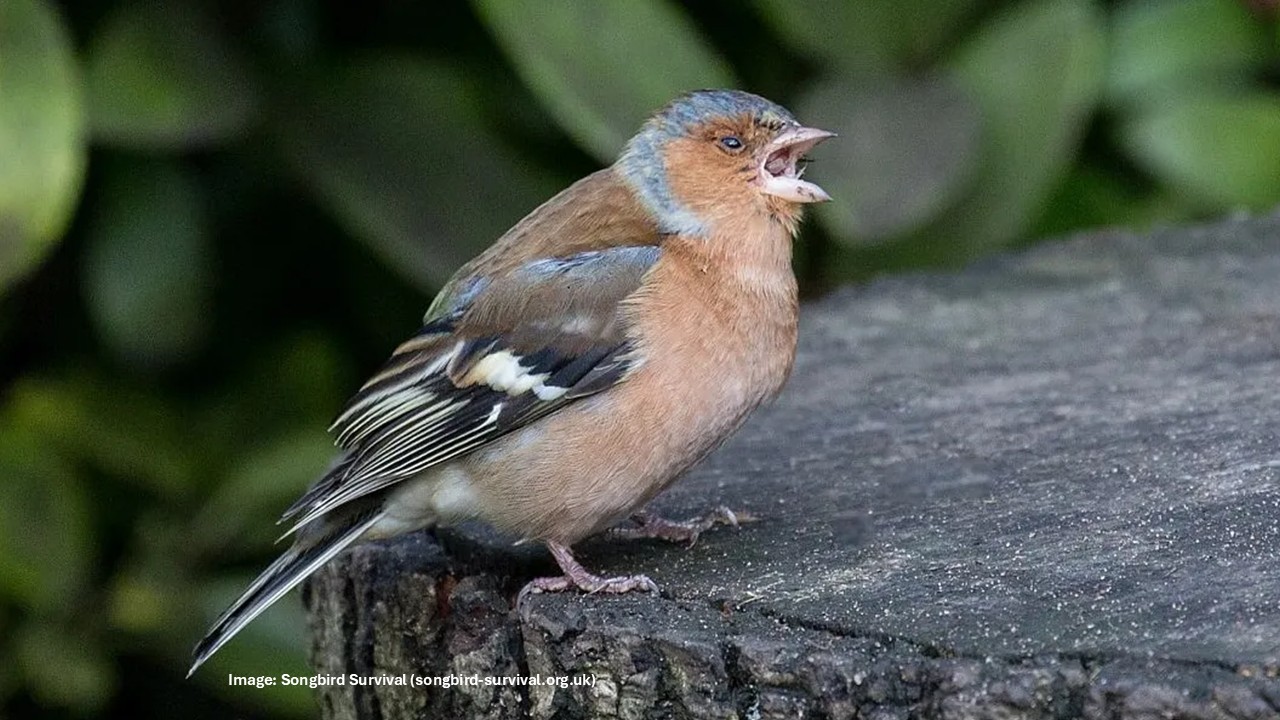
Chaffinches have fared only slightly better, with numbers down by around 37% over the same period. Greenfinches are now on the UK Red List of birds of conservation concern. This is serious.
The cause? A microscopic parasite called Trichomonas gallinae, and the disease it causes: trichomonosis. It first appeared in British garden finches in 2005, and within a year it had spread into epidemic proportions across Great Britain and into Europe. Our garden feeders played a direct role in that spread — and understanding how is key to stopping it.
"I've Been Feeding Birds for Years — Surely I'm Not the Problem?"
This is the reaction a lot of people have, and it’s completely understandable. If you’ve been putting food out for decades and your garden still has birds in it, why change?
The honest answer is: the birds you see are the survivors. The ones who catch trichomonosis don’t tend to die at your feeder. They get sick, fly away, and die quietly in hedgerows or undergrowth nearby. You never see them. That’s why it’s easy to assume everything is fine — and why the disease has been able to spread so widely without most people noticing.
If you’ve seen fewer greenfinches or chaffinches visiting your garden over the last decade, this disease is almost certainly part of the reason.
How the Disease Actually Spreads
This is where it’s worth understanding the biology a little, because it explains exactly why the RSPB’s new advice is what it is.
Trichomonas gallinae is a single-celled parasite that lives in the throat and upper digestive tract of infected birds. It causes a build-up of tissue in the bird’s throat, which makes swallowing difficult and eventually impossible — which is why sick birds are often seen sitting hunched near feeders, reluctant to move, with wet or matted feathers around their beak and face.
The parasite spreads in two main ways:
Directly — through regurgitated food and fresh saliva. When an infected bird feeds at your bird table or feeder, it leaves behind microscopic traces of the parasite in its saliva and in any regurgitated food. The next bird to feed from the same spot can pick it up instantly.
Indirectly — through contaminated food and water that has been sitting out. Research has shown that Trichomonas gallinae can survive outside a host for up to 24 hours in water and for several hours on damp seed. This means a single infected bird visiting your feeder on a Monday morning can still be infecting other birds the following day, long after it has moved on.
Flat surfaces — bird tables, trays, window ledges with feeders — are particularly dangerous because food and saliva-contaminated debris pool and accumulate there, creating a reservoir of infection. The more birds that visit the same spot in warm weather, the faster it spreads.
What the RSPB Is Now Recommending
Feed Seasonally: A Year Split Into Two
Winter (November to April) — Go all out. Seeds, peanuts, suet, mealworms — birds genuinely need the extra calories to survive cold nights, and natural food sources are scarce. This is when your feeder does the most good.
Summer and Autumn (May to October) — Stop offering seeds and peanuts. During warmer months, natural food is plentiful — insects, berries, seeds — so birds are less reliant on feeders. Crucially, warm conditions allow the parasite to persist longer in the environment, and birds congregating at feeders in summer are at much higher risk of transmission. You can still offer small amounts of suet or mealworms if you wish, but the main feeders should come down.
Feed Safely: Hygiene That Actually Breaks the Chain
These steps matter because they directly disrupt the routes by which Trichomonas gallinae spreads:
- Clean feeders and water baths at least once a week — and sweep up any fallen food or droppings underneath too. Damp, contaminated seed on the ground is one of the primary infection routes.
- Move feeders to a different spot every week — this prevents a build-up of infectious debris in a single patch of ground beneath the feeder.
- Stop using flat-surfaced feeders — bird tables, window feeders, and feeders with trays are the highest-risk surfaces for contamination. Switch to hanging tube or net feeders, where food moves through rather than sitting.
- Refresh water daily — water baths can harbour the parasite for up to 24 hours, making daily changes genuinely important, not just tidying.
Beyond the Feeder: What Actually Helps Long Term
Feeders are a wonderful way to connect with garden wildlife, but the birds that truly thrive are those with good habitat — places to nest, shelter, and find natural food throughout the year.
A well-placed nest box, a native hedgerow, a patch of garden left to grow a little wild, or a pond can do more for your local bird population than any seed feeder. These things provide natural food — the insects that birds feed their chicks on, the berries that sustain them in autumn — without the disease risks that come with concentrated feeding stations.
At Wild Veitch, this is exactly what we help Essex homeowners with. Whether you’d like your garden redesigned with nesting birds in mind, a pond added for the species that depend on water, or a wildflower area to support the insects your birds feed on, we can help you build something that genuinely works with nature.
Contact us to find out more.
If you think you’ve seen a sick bird in your garden, you can report it to the Garden Wildlife Health project, run jointly by the Zoological Society of London, the British Trust for Ornithology, the RSPB, and the Animal & Plant Health Agency. Your sightings contribute directly to national disease monitoring. 👉 gardenwildlifehealth.org
References
Garden Wildlife Health (2017) Trichomonosis in Garden Birds [Factsheet]. Zoological Society of London / BTO / RSPB / APHA. Available at: https://www.gardenwildlifehealth.org/wp-content/uploads/sites/12/2018/02/Garden-bird-Trichomonosis-factsheet_GWH_2017.pdf (Accessed: 13 April 2026).
Hanmer, H.J., Cunningham, A.A., John, S.K., Magregor, S.K., Robinson, R.A., Seilern-Moy, K., Siriwardena, G.M. and Lawson, B. (2022) ‘Habitat-use influences severe disease-mediated population declines in two of the most common garden bird species in Great Britain’, Scientific Reports, 12, article 15137. Available at: https://doi.org/10.1038/s41598-022-18880-8 (Accessed: 13 April 2026).
Lawson, B., Robinson, R.A., Colvile, K.M., Peck, K.M., Chantrey, J., Pennycott, T.W., Simpson, V.R., Toms, M.P. and Cunningham, A.A. (2012) ‘The emergence and spread of finch trichomonosis in the British Isles’, Philosophical Transactions of the Royal Society B: Biological Sciences, 367(1604), pp. 2905–2914. Available at: https://doi.org/10.1098/rstb.2012.0130 (Accessed: 13 April 2026).
RSPB (2026) Feed Safely, Feed Seasonally: How to Help Garden Birds. Available at: https://www.rspb.org.uk/whats-happening/news/how-to-help-garden-birds (Accessed: 13 April 2026).
RSPB (no date) Investigating Routes of Finch Trichomonosis Transmission in Gardens. Available at: https://www.rspb.org.uk/helping-nature/what-we-do/influence-government-and-business/policies-and-briefings/investigating-routes-of-finch-trichomonosis-transmission-in-gardens (Accessed: 13 April 2026).
Songbird Survival (no date) Trichomonosis in Songbirds in the UK. Available at: https://www.songbird-survival.org.uk/help-birds/diseases-and-injuries/trichomonosis (Accessed: 13 April 2026).
BTO — British Trust for Ornithology (no date) Trichomonosis. Available at: https://www.bto.org/learn/helping-birds/disease/trichomonosis (Accessed: 13 April 2026).